Experimental Beach Reconstruction-Renourishment on Mixed Sand and Gravel Beaches, Washdyke Lagoon, South Canterbury, New Zealand
- account_circle Ahmad Rizal
- calendar_month 19 menit yang lalu
- visibility 4
- comment 0 komentar
- print Cetak

Experimental Beach Reconstruction-Renourishment on Mixed Sand and Gravel Beaches, Washdyke Lagoon, South Canterbury, New Zealand
Abstract
Coastal erosion is a growing concern for many shorelines worldwide, particularly where human activities and natural coastal processes interact. Mixed sand and gravel (MSG) beaches present unique engineering challenges because they behave differently from purely sandy or rocky coastlines. Washdyke Lagoon, located in South Canterbury, New Zealand, represents an important case study where experimental beach reconstruction and renourishment have been investigated to improve shoreline resilience. This article examines the objectives, methods, outcomes, and lessons learned from experimental renourishment efforts at Washdyke Lagoon while discussing their broader implications for sustainable coastal management.
Introduction
Beach reconstruction and renourishment have become widely accepted coastal engineering techniques for combating shoreline erosion. Rather than relying solely on hard structures such as seawalls or groynes, beach nourishment restores natural sediment systems by adding compatible materials to eroding coastlines.
Mixed sand and gravel beaches are particularly valuable because they provide natural protection against wave attack while supporting diverse coastal ecosystems. However, these beaches require carefully designed nourishment projects since sediment sorting, wave energy, and longshore transport strongly influence their stability.
Washdyke Lagoon offers an excellent example of how experimental beach renourishment can improve coastal resilience while minimizing environmental impacts.
Background of Washdyke Lagoon
Washdyke Lagoon is situated on the east coast of New Zealand’s South Island near Timaru in South Canterbury. The coastline experiences moderate to high wave energy generated by the Pacific Ocean. Historically, sediment transported along the coast has maintained the natural barrier separating the lagoon from the sea.
Human modifications, including harbour construction and changes in sediment supply, have altered the natural littoral drift. Reduced sediment availability has accelerated erosion, threatening both the barrier beach and the lagoon ecosystem.
As erosion intensified, engineers and coastal scientists initiated experimental renourishment projects to investigate whether imported sediment could restore the beach’s protective function.
Why Beach Renourishment Was Needed
Several factors contributed to the degradation of the Washdyke coastline:
- Reduced natural sediment supply
- Longshore sediment transport imbalance
- Storm wave erosion
- Sea-level rise
- Coastal infrastructure development
- Increased frequency of extreme weather events
Without intervention, continued erosion could eventually breach the barrier, allowing seawater intrusion into the lagoon and damaging surrounding habitats.
Characteristics of Mixed Sand and Gravel Beaches
Mixed sand and gravel beaches differ significantly from traditional sandy beaches.
Their sediment composition generally includes:
| Material | Typical Grain Size |
|---|---|
| Fine Sand | 0.063–0.25 mm |
| Medium Sand | 0.25–0.5 mm |
| Coarse Sand | 0.5–2 mm |
| Fine Gravel | 2–16 mm |
| Coarse Gravel | 16–64 mm |
The presence of gravel increases permeability, allowing incoming waves to infiltrate the beach face rather than reflecting all their energy. This process naturally reduces wave run-up and erosion.
However, mixed sediments also experience sorting, where storms separate coarse and fine particles into different zones. Successful nourishment therefore requires sediment that closely matches the native beach material.
Objectives of the Experimental Reconstruction
The Washdyke Lagoon project aimed to:
- Restore beach width
- Improve storm protection
- Reduce shoreline retreat
- Test sediment compatibility
- Monitor long-term stability
- Minimize environmental impacts
- Develop cost-effective coastal management strategies
Rather than immediately implementing a large-scale project, researchers adopted an experimental approach to evaluate performance under real coastal conditions.
Beach Reconstruction Methodology
1. Site Assessment
Before construction, researchers conducted:
- Topographic surveys
- Bathymetric mapping
- Wave climate analysis
- Sediment sampling
- Historical shoreline analysis
These baseline datasets established the pre-project coastal conditions.
2. Sediment Selection
Selecting suitable nourishment material was one of the project’s most important stages.
The imported material needed to:
- Match existing grain-size distribution
- Resist rapid offshore transport
- Remain environmentally compatible
- Avoid excessive fine sediment
A carefully graded mixture of sand and gravel was selected to resemble the native beach profile.
3. Beach Construction
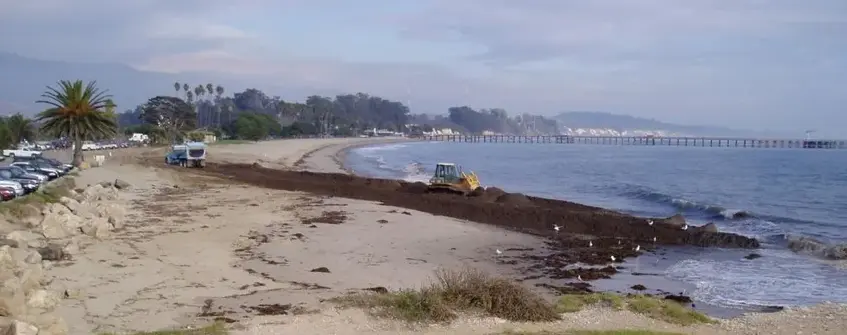
Construction equipment placed nourishment material along selected shoreline sections.
The reconstructed beach profile included:
- Wider upper beach
- Reinforced berm crest
- Stable beach slope
- Natural transition into existing shoreline
This geometry was designed to dissipate wave energy efficiently during storms.
4. Monitoring Program
Monitoring continued for months and years after construction.
Measurements included:
- Beach profile changes
- Sediment movement
- Shoreline position
- Wave conditions
- Storm impacts
- Lagoon water quality
- Ecological observations
Continuous monitoring allowed researchers to determine whether the nourishment behaved as expected.
Observed Performance
Initial observations showed encouraging results.
Positive outcomes included:
Increased Beach Width
The nourished sections exhibited wider beaches capable of absorbing greater wave energy.
Improved Storm Resistance
Storm events caused less severe erosion compared with untreated sections.
Natural Sediment Sorting
Although some sediment redistribution occurred, the beach gradually developed a stable profile resembling natural mixed beaches.
Reduced Shoreline Retreat
The nourishment slowed erosion rates in targeted areas.
Engineering Challenges
Despite positive outcomes, several challenges emerged.
Sediment Loss
Some fine sand migrated offshore during energetic wave conditions.
Longshore Drift
Sediment transport continued moving material along the coast, requiring consideration of periodic maintenance nourishment.
Storm Variability
Extreme storms occasionally exceeded design expectations, temporarily eroding portions of the reconstructed beach.
Monitoring Requirements
Long-term success depended upon ongoing surveying and adaptive management rather than a one-time construction effort.
Environmental Considerations
Beach renourishment generally offers fewer ecological impacts than extensive hard coastal defenses.
Environmental management at Washdyke Lagoon emphasized:
- Protection of lagoon habitats
- Maintenance of coastal biodiversity
- Minimizing turbidity during construction
- Preserving natural shoreline appearance
- Avoiding disruption to coastal wildlife
Monitoring indicated that carefully selected sediment minimized ecological disturbance.
Advantages of Beach Renourishment
Compared with traditional seawalls or revetments, beach renourishment offers several benefits:
- Preserves natural coastal landscapes
- Enhances recreational opportunities
- Dissipates wave energy naturally
- Supports coastal ecosystems
- Can adapt to changing shoreline conditions
- Reduces visual impacts of engineering structures
For mixed sand and gravel beaches, nourishment can restore natural sediment dynamics more effectively than rigid coastal defenses.
Lessons Learned
The Washdyke Lagoon experiment demonstrated several important principles for future coastal management:
- Sediment compatibility is essential.
- Mixed sand and gravel beaches require specialized design.
- Long-term monitoring is critical.
- Adaptive management improves project success.
- Experimental pilot projects reduce uncertainty before large-scale implementation.
- Natural coastal processes should be incorporated rather than resisted.
These lessons continue to influence coastal engineering projects throughout New Zealand and internationally.
Future Applications
As climate change accelerates sea-level rise and increases coastal hazards, beach renourishment will likely become an increasingly important adaptation strategy.
Future improvements may include:
- Numerical coastal modeling
- Drone-based shoreline monitoring
- Artificial intelligence for sediment transport prediction
- Nature-based coastal protection
- Hybrid engineering solutions combining nourishment with ecological restoration
The knowledge gained from Washdyke Lagoon provides valuable guidance for similar mixed sand and gravel coastlines worldwide.
Conclusion
The experimental beach reconstruction and renourishment project at Washdyke Lagoon in South Canterbury demonstrates that carefully designed nourishment can effectively improve the stability of mixed sand and gravel beaches. By restoring natural sediment characteristics rather than relying exclusively on hard coastal defenses, the project enhanced shoreline resilience while maintaining ecological integrity.
Although challenges such as sediment redistribution and long-term maintenance remain, the study highlights the importance of adaptive management, continuous monitoring, and sediment compatibility in successful coastal engineering. As coastal communities face increasing threats from erosion and climate change, the lessons learned from Washdyke Lagoon offer a practical framework for sustainable shoreline management that balances engineering performance with environmental conservation.

Penulis Ahmad Rizal
Ahmad Rizal adalah seorang pengusaha dan pakar industri transportasi darat asal Jawa Timur. Beliau merupakan pendiri sekaligus Direktur Utama dari PT Raratrans Energi Persada, perusahaan yang menaungi Rara Travel & Tour—salah satu penyedia layanan transportasi premium terkemuka yang menghubungkan jalur strategis di Indonesia.