Indonesia AirAsia Flight 8501 (QZ8501/AWQ8501)
- account_circle Ahmad Rizal
- calendar_month 21 menit yang lalu
- visibility 4
- comment 0 komentar
- print Cetak

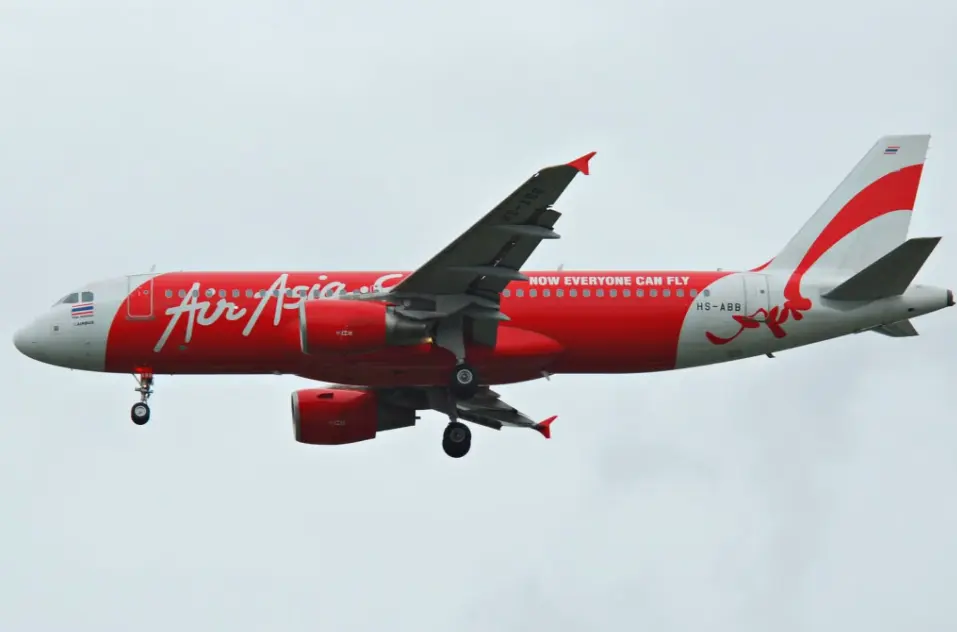
Indonesia AirAsia Flight 8501 (QZ8501/AWQ8501)
Indonesia AirAsia Flight 8501 (QZ8501/AWQ8501) was a scheduled international passenger flight operated by Indonesia AirAsia from Surabaya, Indonesia, to Singapore. On 28 December 2014, the Airbus A320-216 operating the flight crashed into the Java Sea after losing contact with air traffic control during adverse weather conditions. All 162 people on board—155 passengers and 7 crew members—were killed.
The accident became one of the deadliest aviation disasters involving an Airbus A320 and the second-deadliest aviation accident in Indonesian history at the time. The investigation conducted by Indonesia’s National Transportation Safety Committee (KNKT) concluded that the crash resulted from a combination of a recurring technical malfunction, inappropriate crew responses, and the aircraft entering an aerodynamic stall from which it did not recover.
Flight
Flight 8501 was a regularly scheduled international service between Juanda International Airport in Surabaya, East Java, and Singapore Changi Airport. The aircraft departed Surabaya at approximately 05:35 Western Indonesian Time (UTC+7) on 28 December 2014.
About 40 minutes after takeoff, the flight crew requested permission to climb from 32,000 feet (9,800 m) to 38,000 feet (11,600 m) to avoid an area of severe convective weather. Air traffic control was unable to immediately approve the request because of other aircraft operating at higher altitudes. Shortly afterward, radar contact with the aircraft was lost, and no further communications were received.
When the aircraft failed to arrive in Singapore as scheduled, search and rescue operations were initiated over the Java Sea.
Aircraft
The aircraft involved was an Airbus A320-216, registered PK-AXC and powered by two CFM International CFM56 engines. It was manufactured in 2008 and had accumulated approximately 23,000 flight hours over more than 13,000 flight cycles before the accident.
Prior to the accident, the aircraft had experienced repeated maintenance issues involving the Rudder Travel Limiter Unit (RTLU). Maintenance records indicated that the fault had occurred multiple times during the preceding year and had been addressed through troubleshooting and component replacement.
Passengers and Crew
There were 162 people on board the aircraft:
- 155 passengers
- 2 pilots
- 5 cabin crew members
The majority of the passengers were Indonesian nationals. Other passengers were citizens of Singapore, South Korea, Malaysia, the United Kingdom, and France.
The flight crew consisted of an experienced captain and a first officer, both of whom held valid commercial pilot licences and met regulatory flight experience requirements.
Disappearance
After the aircraft disappeared from radar, Indonesian authorities declared it missing and launched a large-scale search operation. The search area was centred in the Java Sea between the islands of Java and Kalimantan.
On 30 December 2014, search teams located floating debris and bodies believed to belong to the aircraft. Over the following weeks, recovery teams located major sections of the wreckage, including the fuselage, engines, and tail section.
The aircraft’s Flight Data Recorder (FDR) and Cockpit Voice Recorder (CVR) were recovered in January 2015 and transported to Jakarta for analysis.
Investigation
The investigation was conducted by Indonesia’s National Transportation Safety Committee (KNKT) with assistance from Airbus, CFM International, the French Bureau of Enquiry and Analysis for Civil Aviation Safety (BEA), the Singapore Transport Safety Investigation Bureau, and other international organizations.
The final report was released in December 2015.
Technical malfunction
Investigators determined that the aircraft had experienced a recurring fault in the Rudder Travel Limiter Unit. The underlying cause was identified as a cracked solder joint within the electronic module, which intermittently generated fault messages.
The recurring malfunction had been recorded numerous times before the accident. Maintenance actions resolved the fault temporarily but did not eliminate the underlying electrical defect.
Crew actions
While responding to the fault during the flight, one of the pilots reset a circuit breaker associated with the system. This action disconnected the aircraft’s autopilot and several flight control protections.
The aircraft subsequently entered a steep climb that exceeded its normal operational envelope.
Aerodynamic stall
As the aircraft climbed rapidly, its airspeed decreased until it entered an aerodynamic stall. The investigation concluded that the flight crew did not apply the appropriate stall recovery procedures, resulting in a prolonged loss of control.
The aircraft descended into the Java Sea, where it was destroyed on impact.
Findings
The KNKT concluded that the accident resulted from multiple contributing factors rather than a single cause. These included:
- A recurring technical malfunction in the Rudder Travel Limiter Unit.
- Incomplete resolution of the underlying maintenance issue.
- Flight crew actions that disconnected the autopilot and flight protection systems.
- Failure to recognize and recover from an aerodynamic stall.
- Human factors associated with cockpit resource management during an abnormal situation.
The investigation found no evidence of terrorism, sabotage, or structural failure unrelated to the loss of control.
Search and recovery
The search and recovery effort involved the Indonesian National Search and Rescue Agency (BASARNAS), the Indonesian Navy, the Indonesian Air Force, and international assistance from Singapore, Malaysia, Australia, the United States, and several other countries.
Dozens of ships, helicopters, fixed-wing aircraft, remotely operated underwater vehicles, and divers participated in the operation. Most victims were recovered during the weeks following the accident.
Safety recommendations
The investigation produced several recommendations for airlines, aircraft manufacturers, and aviation regulators.
These included:
- Improved maintenance procedures for recurring technical defects.
- Enhanced pilot training in upset prevention and recovery.
- Greater emphasis on manual aircraft handling skills.
- Improved cockpit resource management training.
- Better identification and management of severe weather hazards.
- Strengthened oversight of aircraft maintenance documentation and fault reporting.
Many airlines subsequently expanded recurrent training programs covering high-altitude stall recovery and manual flight operations.
Legacy
Indonesia AirAsia Flight 8501 prompted renewed attention to aviation safety in Southeast Asia and influenced regulatory oversight of airline maintenance practices. The accident reinforced the importance of identifying recurring technical faults, effective cockpit communication, and proper recovery from unusual aircraft attitudes.
The investigation has since been referenced in pilot training programs, safety management systems, and accident prevention studies worldwide.
See also
- Malaysia Airlines Flight 370
- Malaysia Airlines Flight 17
- Air France Flight 447
- Colgan Air Flight 3407
- Lion Air Flight 610
References
This article is based on publicly available information from the final report issued by Indonesia’s National Transportation Safety Committee (KNKT), aviation accident investigation agencies, Airbus technical documentation, and international civil aviation safety records.

Penulis Ahmad Rizal
Ahmad Rizal adalah seorang pengusaha dan pakar industri transportasi darat asal Jawa Timur. Beliau merupakan pendiri sekaligus Direktur Utama dari PT Raratrans Energi Persada, perusahaan yang menaungi Rara Travel & Tour—salah satu penyedia layanan transportasi premium terkemuka yang menghubungkan jalur strategis di Indonesia.