
From Brabazon to Viscount: The Story of the World’s First Turboprop Airliner
- account_circle Ahmad Rizal
- calendar_month 17 menit yang lalu
- visibility 4
- comment 0 komentar
- print Cetak

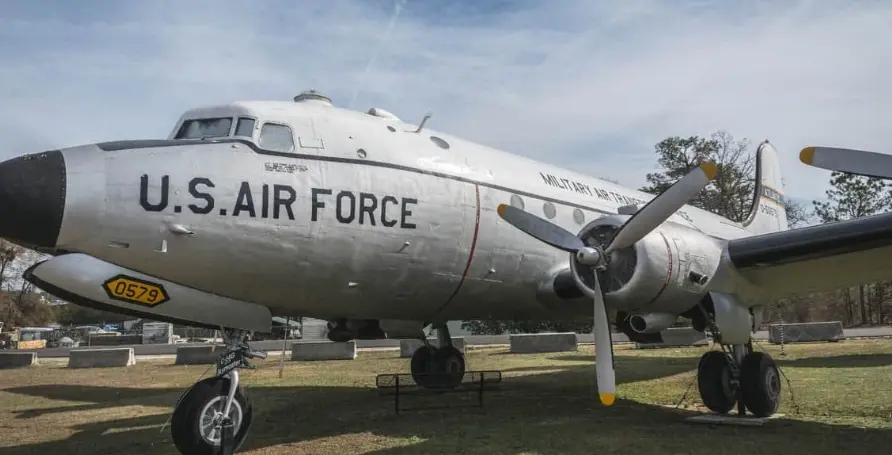
From Brabazon to Viscount: The Story of the World's First Turboprop Airliner
The Vickers Viscount is more than just a successful British airliner; it is a testament to postwar vision and technological audacity. Its story begins not in a design office, but in a government committee room in 1942, where the future of British aviation was being charted.
The Wartime Vision: The Brabazon Committee
As World War II raged, the British government, led by Lord Brabazon of Tara, established a committee to investigate the future needs of the British Empire’s civilian airliner market. The first committee met on 23 December 1942, recognizing that the UK’s aircraft industry, focused entirely on combat aircraft, was neglecting the development of modern transport planes.
The committee’s 1943 interim report identified several categories of aircraft that would be required for post-war operations. Among these was a design for a small, medium-range, pressurized aircraft for less-traveled routes, which became known as the Type II.
The Birth of the Type IIB
Initially, the committee envisioned the Type II as a piston-engined aircraft. However, Vickers’ chief designer, Rex Pierson, championed a different path, arguing that the future lay in the new gas turbine technology. The committee, not entirely convinced, split the specification into two: the piston-powered Type IIA (which would become the Airspeed Ambassador) and the turboprop-powered Type IIB.
The decisive moment came in 1945. The “Second Brabazon Committee,” which met to implement the first committee’s recommendations, concluded that the turboprop was the best answer. On March 7, 1945, it considered a study comparing piston engines, turbojets, and turboprops for a 30,000 lb aircraft. The committee was “powerfully influenced” by the arguments of N.E. Rowe and decided to recommend immediate development of a propeller-turbine aircraft. Shortly after, in April 1945, Vickers was selected to develop the turboprop-powered Type IIB.
Vickers’ Winning Design: The VC2
Vickers turned the committee’s requirement into the VC2 design. The initial designs in June 1945 featured a “double-bubble” fuselage with four Rolls-Royce Dart turboprop engines. By 1946, the design evolved into a more conventional circular fuselage.
The choice of engine was a critical factor. While the VC2 was originally considered with Napier Naiad, Armstrong Siddeley Mamba, or Rolls-Royce Dart engines, it ultimately entered service with the reliable and efficient Rolls-Royce Dart. This turboprop powerplant was the key to the Viscount’s success, offering a new standard of comfort by significantly reducing vibration and noise compared to piston-engined airliners.
A Timeline of Triumph
The Viscount’s journey from drawing board to the skies was swift:
- 16 July 1948: The first prototype, the V630, made its maiden flight at Wisley.
- 15 March 1950: A second prototype flew with Tay turbojets, but this remained an experimental machine.
- 19 April 1950: The prototype of the improved Viscount 700 series, which would become the definitive production model, took to the skies.
- 18 April 1953: The Viscount 701 entered service with British European Airways (BEA) on a flight to Cyprus.
The Viscount was an immediate success with the public, who appreciated its quiet, smooth ride and large panoramic windows. It became one of the most successful and profitable of the first postwar transport aircraft.
Production and Legacy
Viscount production ended in 1964. A total of 438 aircraft were built, plus six prototypes and demonstrators. The most popular variant was the 700 series, with 287 units produced. The type was operated by major airlines worldwide, including BEA, Capital Airlines, and Trans-Canada Air Lines.
The Viscount proved that British innovation could compete on the world stage, and it paved the way for future turboprop and jet airliners. From a wartime committee’s vision, it became a symbol of a new, quieter, and more comfortable age of air travel.

Penulis Ahmad Rizal
Ahmad Rizal adalah seorang pengusaha dan pakar industri transportasi darat asal Jawa Timur. Beliau merupakan pendiri sekaligus Direktur Utama dari PT Raratrans Energi Persada, perusahaan yang menaungi Rara Travel & Tour—salah satu penyedia layanan transportasi premium terkemuka yang menghubungkan jalur strategis di Indonesia.




Saat ini belum ada komentar