
The Caravelle: Past, Present and Future
- account_circle Ahmad Rizal
- calendar_month 0 menit yang lalu
- visibility 2
- comment 0 komentar
- print Cetak

The Caravelle: Past, Present and Future
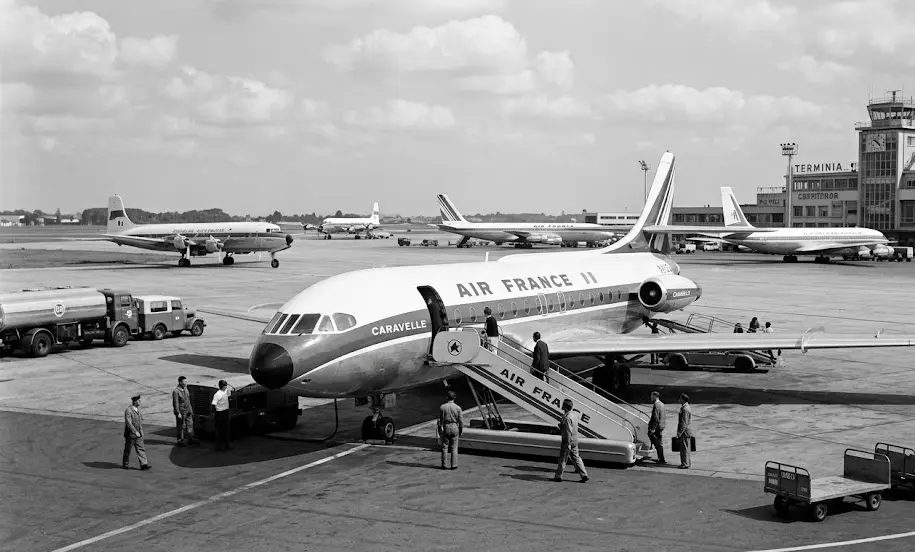
The Sud Aviation Caravelle stands as a testament to European engineering ingenuity, marking a pivotal shift in the evolution of commercial aviation. As the world’s first short-to-medium-range jetliner to feature rear-mounted engines, the Caravelle has not only redefined the aesthetics of modern flight but has also set new benchmarks for efficiency and passenger comfort in an increasingly connected era.
The Past: A Vision Realized
The journey of the Caravelle began with a requirement for a robust, high-speed successor to the piston-engine airliners of the post-war era. Developed by the French manufacturer Sud-Est (later Sud Aviation), the design was radical. By shifting the powerplants from the wings to the rear fuselage, engineers successfully reduced cabin noise and aerodynamic interference, creating a cleaner wing profile.
Since its maiden flight in 1955 and its subsequent entry into service in 1959, the aircraft has proven its mettle. It successfully bridged the gap between propeller-driven convenience and jet-age speed, allowing airlines to operate from shorter runways while maintaining a cruising speed that rivals its larger transcontinental counterparts.
The Present: Refinement and Dominance
As of September 1963, the Caravelle has cemented its position as a cornerstone of short-haul transport. Operators across Europe and South America have lauded the aircraft for its reliability and ease of maintenance. The transition from the original Caravelle I to the more powerful variants, such as the Caravelle VI-R—featuring thrust reversers that significantly enhance safety during landing—demonstrates a commitment to continuous improvement.
In the current market, the aircraft serves as the backbone for regional expansion. Its ability to provide “pure jet” performance on routes previously deemed unsuitable for turbine-powered aircraft has allowed carriers to increase flight frequencies and passenger capacity, directly impacting the growth of civil aviation trade.
The Future: Evolution on the Horizon
Looking forward, the future of the Caravelle remains bright, though it faces an increasingly competitive landscape. As global air traffic demand continues to climb, the industry anticipates further advancements in airframe longevity and engine efficiency. There is growing discussion regarding the development of stretched versions to accommodate higher seating capacities, ensuring that the Caravelle remains a viable asset for the next decade.
Moreover, the integration of advanced navigational aids and improved automated systems suggests that the Caravelle will not merely remain in service, but will lead the charge in defining the standards of the late 1960s. The legacy of this aircraft is not found only in its airframe, but in the confidence it has instilled in the public regarding the safety and viability of jet travel.
Conclusion
The Sud Aviation Caravelle has successfully navigated the challenges of its formative years to become the definitive short-haul jet of our time. By balancing innovative design with operational practicality, it has secured its place in history. As we look toward the future, the Caravelle continues to symbolize the bridge between the pioneering spirit of the past and the sophisticated, high-speed connectivity of the future.
Date: 12 September 1963
Pages: 456–458
Published in the Aeronautical Review, Vol. 14, No. 9.

Penulis Ahmad Rizal
Ahmad Rizal adalah seorang pengusaha dan pakar industri transportasi darat asal Jawa Timur. Beliau merupakan pendiri sekaligus Direktur Utama dari PT Raratrans Energi Persada, perusahaan yang menaungi Rara Travel & Tour—salah satu penyedia layanan transportasi premium terkemuka yang menghubungkan jalur strategis di Indonesia.





Saat ini belum ada komentar