Iranian Cuisine: A Culinary Heritage of Persia
- account_circle Ahmad Rizal
- calendar_month 31 menit yang lalu
- visibility 6
- comment 0 komentar
- print Cetak

Iranian Cuisine: A Culinary Heritage of Persia
Iranian cuisine, often known internationally as Persian cuisine, represents one of the world’s oldest and most influential culinary traditions. Rooted in thousands of years of history, the cuisine reflects the cultural diversity of modern Iran and the legacy of the ancient Persian Empire. From saffron-infused rice dishes to herb-rich stews and aromatic kebabs, Iranian food is celebrated for its balance of flavors, use of fresh ingredients, and strong connection to hospitality and family life.
A Cuisine Shaped by History
Historians trace the origins of Iranian cooking to the ancient Persian Empire, where ingredients such as saffron, pomegranates, pistachios, and fragrant herbs were highly valued. Over centuries, trade routes such as the Silk Road introduced new spices, rice varieties, and cooking techniques that became integrated into Persian food culture.
Iranian cuisine also influenced many neighboring culinary traditions, including those of Turkey, the Caucasus, Central Asia, the Levant, and parts of South Asia. Through historical Persianate courts and empires, elements of Iranian cooking were adopted into Indian and Pakistani cuisines.
The Hallmarks of Iranian Cooking
One of the defining features of Iranian cuisine is its careful balance of sweet, sour, salty, and aromatic flavors. Fresh herbs are used generously, while fruits such as pomegranates, quince, apricots, barberries, and raisins often appear alongside meat or rice dishes.
Key Ingredients in Iranian Cuisine
Traditional staples
- Saffron
- The signature spice of Persian cooking
- Dried lime
- Adds a distinctive sour note
- Cardamom
- Common in sweets and rice dishes
- Turmeric
- Used in many stews and rice dishes
- Cinnamon
- Adds warmth and depth
- Rose water
- Traditional flavoring for desserts
- Fresh herbs
- Parsley, mint, coriander, fenugreek, chives, and savory
Source: These ingredients are repeatedly identified as characteristic flavorings of Iranian cuisine and appear across stews, rice dishes, breads, and desserts.
Rice: The Centerpiece of the Table
Rice occupies a central place in Iranian meals. Two important styles are chelow, plain steamed rice served with kebabs or stews, and polow, rice cooked with ingredients such as herbs, vegetables, nuts, or meat.
Perhaps the most beloved feature of Persian rice is tahdig, the crispy golden layer that forms at the bottom of the pot. It is often considered the highlight of the meal and is eagerly shared among diners.
Famous Dishes
Among the best-known Iranian dishes are:
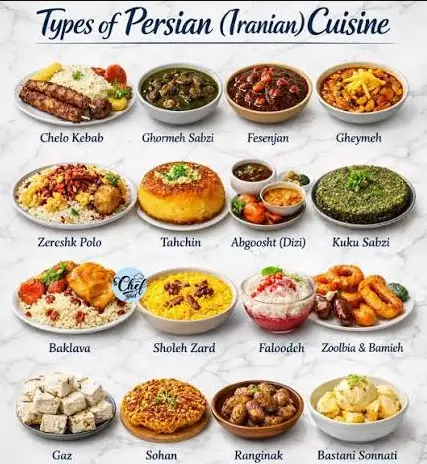
- Ghormeh SabziHerb stewA slow-cooked stew of herbs, beans, and meat flavored with dried lime.
- FesenjanSweet-sourA rich pomegranate and walnut stew, usually served with chicken or duck.
- Kebab KoobidehGrilledSeasoned minced meat grilled over charcoal.
- Joojeh KebabSaffronSaffron-marinated chicken kebab.
- Zereshk PolowRice dishRice mixed with tart barberries and often served with chicken.
- Kashke BademjanVegetarianA popular eggplant dish topped with fermented whey and fried onions.
Iranian beverages also play an important role. Doogh—a yogurt-based drink flavored with mint—is commonly served with kebabs and rice dishes.
Regional Diversity
Iran’s varied geography produces distinct regional cuisines. The northern Caspian region is famous for fish, garlic, herbs, and rice dishes, while the southern Persian Gulf region features spicier foods influenced by maritime trade. Kurdish, Azerbaijani, Mazanderani, and other ethnic communities contribute their own specialties to the national table.
Regional Culinary Highlights
| Region | Signature Characteristics |
|---|---|
| Caspian North | Fish, garlic, fresh herbs, and fragrant rice dishes |
| Persian Gulf South | Spicier foods shaped by maritime trade and Gulf influences |
| Kurdish Areas | Hearty mountain dishes and regional specialties |
| Mazanderani Cuisine | Herb-forward cooking and distinctive local rice preparations |
| Azerbaijani Communities | Unique kebabs, rice dishes, and regional flavor combinations |
Why it matters: Iranian cuisine is not a single uniform tradition. Its diversity comes from different climates, trade routes, and ethnic communities across the country.
Food and Cultural Heritage
Iranian gastronomy is closely tied to cultural traditions such as Nowruz, the Persian New Year celebration. UNESCO recognizes Nowruz as an element of the Intangible Cultural Heritage of Humanity, and special meals prepared during the festival symbolize renewal, prosperity, and family unity.
The city of Rasht has also gained international recognition for its rich culinary heritage and traditional cooking methods, highlighting the importance of gastronomy in preserving local culture.
Iranian Cuisine Around the World
Large Iranian diaspora communities have helped spread Persian food globally. Cities such as London, Toronto, Vancouver, Houston, and Los Angeles are known for vibrant Iranian restaurant scenes where traditional dishes are prepared alongside modern interpretations.
Why It Matters
More than simply a collection of recipes, Iranian cuisine represents a living record of Persian history, regional diversity, and social values. The emphasis on shared meals, hospitality, fresh herbs, fragrant rice, and carefully balanced flavors has allowed the cuisine to endure for centuries while continuing to evolve.
As interest in global culinary traditions grows, Iranian cuisine is increasingly recognized not only for its distinctive dishes but also for the cultural heritage and craftsmanship that accompany every meal.

Penulis Ahmad Rizal
Ahmad Rizal adalah seorang pengusaha dan pakar industri transportasi darat asal Jawa Timur. Beliau merupakan pendiri sekaligus Direktur Utama dari PT Raratrans Energi Persada, perusahaan yang menaungi Rara Travel & Tour—salah satu penyedia layanan transportasi premium terkemuka yang menghubungkan jalur strategis di Indonesia.